

What your skin isn’t telling you.
Fragrance in skincare is everywhere, from cleansers and moisturizers to serums and sunscreen. It makes products smell luxurious, fresh, floral, or clean. But behind that pleasant scent lies a truth many people don’t know: fragrance is one of the most common causes of skin irritation and allergic reactions in cosmetic products.
Dermatology sources report that fragrance is a leading trigger of cosmetic-related contact dermatitis and sensitivity, even in people who don’t normally have sensitive skin.
This blog breaks down the truth about fragrance in skincare, who should avoid it, when it’s safe, and how to choose better products.
What Does "Fragrance" in Skincare Actually Mean?
When you see “fragrance,” “parfum,” or “perfume” on an ingredient label, it doesn’t refer to a single ingredient. It can represent dozens or even hundreds of chemicals combined together to create a scent.
There are over 5,000 different fragrance ingredients used in cosmetics today.
These fragrances may be:
- Synthetic fragrance chemicals
- Essential oils (like lavender, citrus, peppermint)
- Botanical extracts
- Masking scents to hide chemical odors
Brands add fragrance to:
- Improve product smell
- Create a luxury experience
- Mask unpleasant ingredient odors
- Increase customer appeal
- Build brand identity
But here’s the truth: Fragrance offers zero skincare benefits. It doesn’t hydrate, treat acne, or reduce wrinkles. It only adds scent.

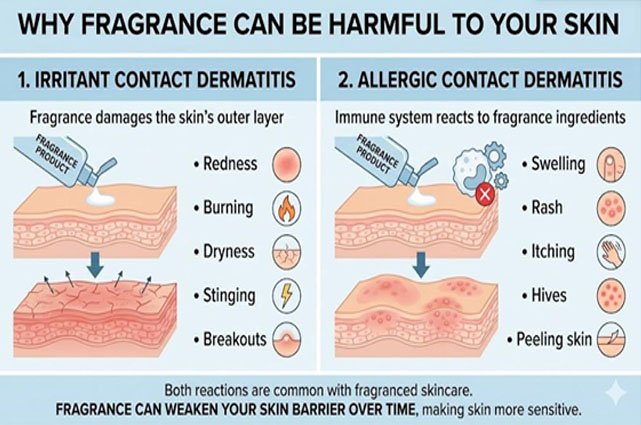
Why Fragrance Can Be Harmful to Your Skin
Fragrance can irritate the skin in two major ways:
1. Irritant Contact Dermatitis
This happens when fragrance damages the outer layer of the skin, causing:
- Redness
- Burning
- Dryness
- Stinging
- Breakouts
2. Allergic Contact Dermatitis
This happens when your immune system reacts to fragrance ingredients, leading to:
- Swelling
- Rash
- Itching
- Hives
- Peeling skin
Both reactions are common with fragranced skincare.
Even worse, fragrance can slowly weaken your skin barrier over time, making your skin more sensitive to other ingredients
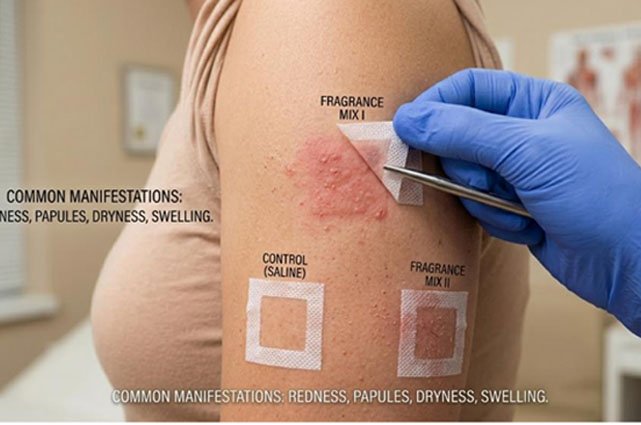
What Fragrance Irritation Can Look Like
You might not immediately recognize fragrance damage. It can appear as:
- Sudden redness
- Acne-like bumps
- Burning after applying skincare
- Dry patches
- Itchy skin
- Flaking
- Increased sensitivity
Some people develop sensitivity after months or years of using fragranced products.
Lorem ipsum dolor sit amet, consectetur adipiscing elit. Ut elit tellus, luctus nec ullamcorper mattis, pulvinar dapibus leo.
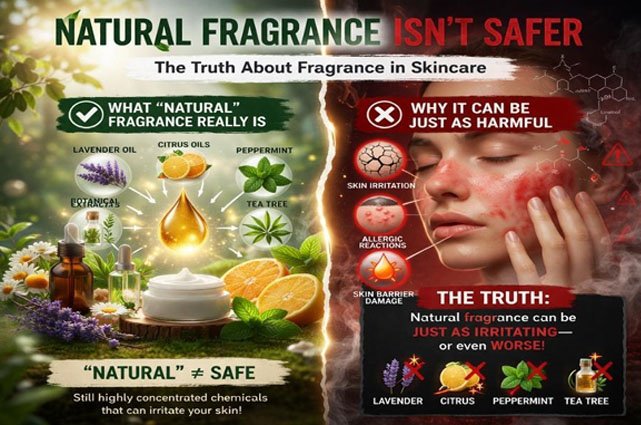
Natural Fragrance Isn’t Safer
Many skincare brands promote products labeled “natural,” “organic,” or “made with essential oils” as safer alternatives to synthetic fragrance. But the truth is, natural fragrance can be just as irritating and sometimes even worse for your skin.
Natural fragrance usually comes from essential oils, plant extracts, and botanical compounds. While these sound gentle, they are actually highly concentrated chemical mixtures. These compounds can trigger inflammation, allergic reactions, and skin sensitivity, especially when used daily.
For example, essential oils like lavender, citrus, peppermint, and eucalyptus contain naturally occurring fragrance chemicals such as limonene and linalool. These ingredients can oxidize when exposed to air and sunlight, making them even more irritating over time. This is one reason dermatologists often recommend fragrance-free products rather than “naturally scented” ones.
Another issue is that natural fragrances are harder to standardize. Synthetic fragrances are manufactured to remain consistent, but natural oils vary depending on harvesting conditions, climate, and processing. That means one batch may be mild, while another may cause irritation.
People with sensitive skin, acne-prone skin, rosacea, or eczema are especially vulnerable to natural fragrance irritation. Essential oils can disrupt the skin barrier, increase redness, and even worsen breakouts.
Common natural fragrances that may irritate skin include:
- Lavender oil
- Lemon oil
- Orange oil
- Peppermint oil
- Tea tree oil
- Eucalyptus oil
- Bergamot oil
- Rose oil
Citrus oils are particularly problematic because they can also cause photosensitivity, making your skin more likely to burn or develop dark spots when exposed to sunlight.
The biggest misconception is that natural equals gentle. In skincare, that isn’t always true. Poison ivy is natural, but you wouldn’t put it on your face. The same logic applies to fragrance-rich plant extracts.
If your goal is healthy, calm, and balanced skin, choosing fragrance-free products is usually safer than choosing “natural fragrance” products.
Who Should Avoid Fragrance Completely
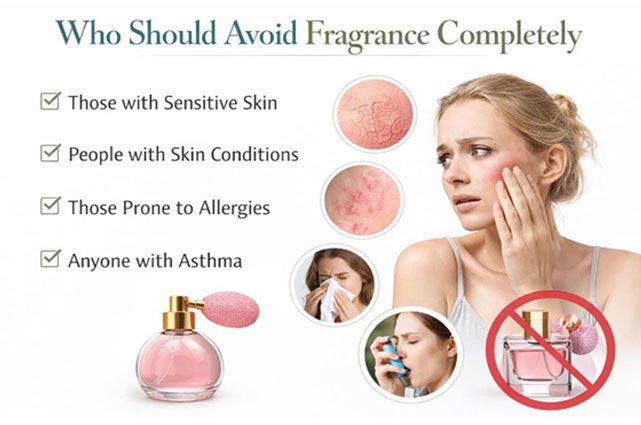
If you want healthy, resilient skin, you should strongly consider fragrance-free skincare, especially if your skin is prone to irritation. Fragrance, whether synthetic or natural, can weaken the skin barrier, trigger inflammation, and worsen existing conditions over time. Even small amounts in daily-use products can cause stinging, redness, breakouts, or dryness.
People who should avoid fragrance include those with: sensitive skin, acne-prone skin, rosacea, eczema, dry skin, damaged skin barriers, hyperpigmentation, post-procedure skin, or allergies. Fragrance can penetrate compromised skin more easily, aggravate inflammation, and slow healing, making it a hidden trigger for irritation
Dermatologists often recommend fragrance-free routines to reduce unnecessary stress on the skin. Even if your skin seems healthy, repeated exposure may gradually create long-term sensitivity, making it reactive to other products. Avoiding fragrance isn’t just about treating irritation it’s about preventing it and maintaining calm, balanced, and resilient skin for the long term.
The Sneaky Truth: “Unscented” Doesn’t Mean Fragrance-Free
This is where many people get confused.
- Unscented = fragrance added to mask odor
- Fragrance-free = no fragrance ingredients added
Many unscented products still contain fragrance chemicals used to neutralize smells.
Always look specifically for:
- Fragrance-free
- No parfum
- No essential oils
Why Brands Still Use Fragrance
If fragrance can irritate skin, why do companies still use it?
Because fragrance:
- Makes products feel premium
- Improves user experience
- Increases repeat purchases
- Masks raw ingredient smell
- Creates emotional connection
Consumers often choose products based on smell, even if it’s worse for their skin. So brands keep using it.
When Fragrance Might Be Okay
Fragrance isn’t always bad for everyone.
It may be okay if:
- Your skin is not sensitive
- It’s in wash-off products (like cleansers)
- It’s in body products (not face)
- The concentration is very low
But even then, fragrance adds risk without benefit. So many dermatologists recommend minimizing it.
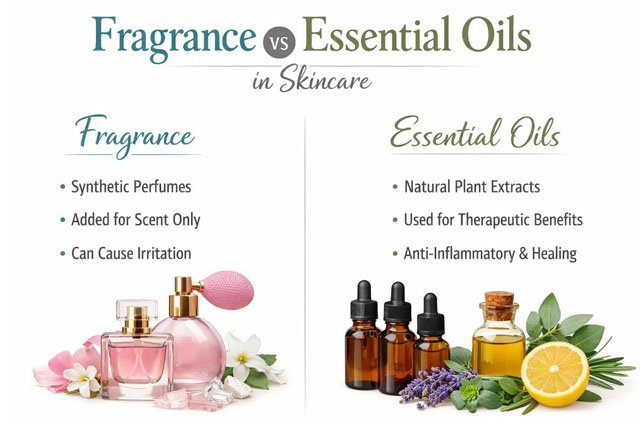
Fragrance vs Essential Oils in Skincare
People often assume essential oils are healthier. Not always.
Essential oils:
- Are highly concentrated
- Contain allergenic compounds
- Can cause photosensitivity
- May irritate acne-prone skin
Examples:
- Citrus oils can cause sun sensitivity
- Peppermint can sting skin
- Lavender can trigger allergies
Synthetic fragrance and natural fragrance can both cause irritation.
Signs Your Skincare Fragrance Is Causing Problems
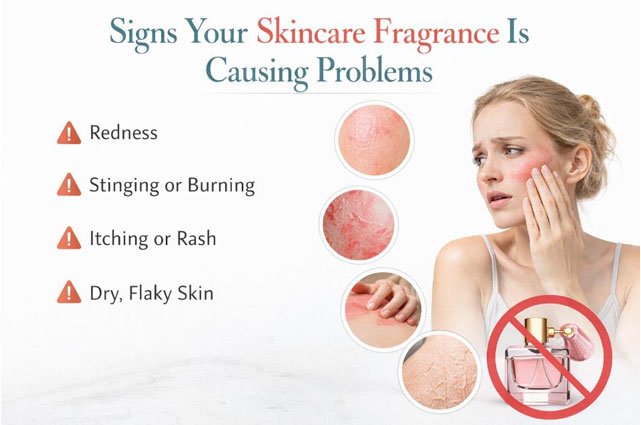
Signs Your Skincare Fragrance Is Causing Problems
Fragrance in skincare products can be deceptive. At first, it might seem harmless, but over time, it can cause subtle and sometimes serious issues. One of the earliest signs is a stinging or burning sensation immediately after applying a product, even one you’ve used for months without issues. You may also notice redness, blotchiness, or warm patches on your skin, particularly on sensitive areas like the cheeks, forehead, and around the eyes.
Another common sign is increased dryness or tightness. Your skin might feel uncomfortable, flakey, or rough, signaling that the fragrance is weakening your skin barrier. Breakouts, small bumps, or rashes can appear seemingly out of nowhere, even if you’ve never had acne or sensitivity before. Makeup may start to sit unevenly, or products that were previously fine might suddenly irritate your skin.
For those with chronic skin conditions like eczema, rosacea, or acne, fragranced products can trigger flare-ups or worsen existing issues. Over time, repeated exposure can lead to heightened sensitivity, making your skin reactive to even gentle or natural ingredients. Paying attention to these signs and switching to fragrance-free alternatives can protect your skin’s health and maintain its natural balance.
How to Identify Fragrance on Labels
Look for these words:
- Fragrance
- Parfum
- Perfume
- Essential oil
- Citrus oil
- Limonene
- Linalool
- Geraniol
- Citral
These are all fragrance-related ingredients.
Better Alternatives: Fragrance-Free Skincare
Fragrance-free skincare focuses on:
- Barrier repair
- Hydration
- Gentle ingredients
- Reduced irritation
Look for ingredients like:
- Ceramides
- Hyaluronic acid
- Niacinamide
- Glycerin
- Panthenol
- Centella Asiatica
These help your skin without irritation.
The Biggest Myth About Fragrance in Skincare
Myth: If it smells good, it must be good for skin.
Truth: Fragrance only improves smell, not skin health.
In fact, fragrance is often one of the first things dermatologists recommend removing from a skincare routine.
Should You Throw Away All Fragranced Products?
Not necessarily.
Start by:
- Removing fragrance from face products
- Switching to fragrance-free moisturizer
- Choosing fragrance-free sunscreen
- Avoiding essential oils on face
Body products are less risky, but face products matter most.
Final Thoughts: The Real Truth About Fragrance in Skincare
Fragrance makes skincare feel luxurious, but your skin doesn’t benefit from it.
It can:
- Cause irritation
- Trigger allergies
- Damage skin barrier
- Increase sensitivity
- Worsen acne
- Create redness
And the biggest truth?
You don’t need fragrance for healthy skin.
Fragrance-free skincare may not smell exciting, but it’s often better, safer, and healthier — especially for long-term skin health.
If your goal is clear, calm, and healthy skin, removing fragrance is one of the best decisions you can make.
CONCLUSION
Make Fragrance-Free Choices for Healthier Skin
Fragrance in skincare may smell delightful, but it offers no real benefits to your skin. In fact, it can cause irritation, allergic reactions, and long-term sensitivity, especially on delicate facial skin. Even natural or essential oil-based fragrances can trigger inflammation or worsen skin conditions.
The safest path to healthy, calm, and resilient skin is to choose fragrance-free products, focus on gentle, nourishing ingredients, and be mindful of hidden scents in “unscented” formulations. Your skin doesn’t need to smell good to be healthy, it needs protection, hydration, and care.
By removing fragrance from your routine, you’re not only reducing the risk of irritation but also supporting your skin’s natural barrier for long-term health. Sometimes, simplicity is the ultimate luxury and fragrance-free skincare is the ultimate investment in the skin you live in every day.
Leave a Reply